
0
0
0
0
0
0
0
0
0
or copy the link
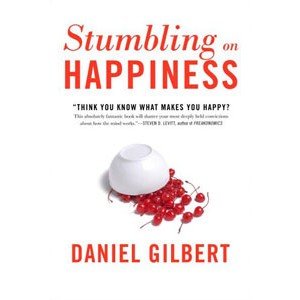
This is a book that describes what science has to tell us about how and how well the human brain can imagine its own future, and about how and how well it can predict which of those futures it will most enjoy. This book is about a puzzle that many thinkers have pondered over the last two millennia, and it uses their ideas (and a few of the author’s) to explain why we seem to know so little about the hearts and minds of the people we are about to become. The story is a bit like a river that crosses borders without benefit of passport because no single science has ever produced a compelling solution to the puzzle – weaving together facts and theories from psychology, cognitive neuroscience, philosophy, and behavioral economics.
Before you try to get happy, read this to get smart I love a quote by Dr. Richard Feynman, the late Nobel Prize winning physicist: “The first principle is that you must not fool yourself – and you are the easiest person to fool”. If you want to be happy, happy with your choices and the outcomes of your efforts you should buy and read this book to at least understand why you are pretty much hard-wired to break Dr. Feynman’s first principle while you are trying to do so.Until recently, when someone asked me “what do you want from life?” I would survey the myriad wishes and desires floating around in my mind and pull out some random musing to do with creating a family or making more money than I knew what to do with. I have certainly worked towards these things and had varying levels of success with love and career and material wealth. But I have always been baffled by why virtually nothing could make me happy in a lasting and predictable way. I am not baffled anymore, even though I am still unhappy in a lot of ways. “Stumbling on Happiness” has educated me to the ways that people exhibit self-delusion when looking forward to predict how happy some future experience will make them happy.Gilbert is wickedly funny at times as he describes the mechanisms that lead us to distort our thinking; our projections about what will bring about our future selves happiness. This is the kind of information (why we’re so deluded) I expected to get from the book. But he goes further and explains how we often don’t even know how we feel in a particular moment and how we can have an *experience* of something, without it ever bubbling up into our conscious *awareness*. The onslaught of the information demonstrating the failures of human imagination in achieving contentment is a lot to take in… I felt myself a little depressed at my chances at choosing any future path that was any better than what I’d done up to this point.But I came to a realization about what I’d learned here: if you are like me and are actively looking to increase your level of happiness, while this book is not directly practical in accomplishing that, it is an essential base upon which to evaluate other materials. Having this book as a counterpoint to other, more practical books (say in the field of Positive Psychology) will increase your chances of not fooling yourself (at least not as badly or for as long). And to be fair, he does offer one suggestion.I heard about this book listening to an interview with him on the CBC Radio program ‘Tapestry’. I highly recommend taking the 24 minutes to listen to that interview (Google: ‘tapestry daniel gilbert’ to listen online) if you want a preview of the fascinating content of the book.
A pretty happy read- but not as happy as you think it is going to be Here are some of the most important points of this book:1) We often exaggerate in imagining the long- term emotional effects certain events will have on us.2) Most of us tend to have a basic level of happiness which we revert to eventually.3) People generally err in imagining what will make them happy.4) People tend to find ways of rationalizing unhappy outcomes so as to make them more acceptable to themselves.5) People tend to repeat the same errors in imagining what will make them happy.6) Events and outcomes which we dread may when they come about turn into new opportunities for happiness.7) Many of the most productive and creative people are those who are continually unhappy with the world- and thus strive to change it.8) Happiness is rarely as good as we imagine it to be, and rarely lasts as long as we think it will. The same mistaken expectations apply to unhappiness.Gilbert makes these points and others with much anecdotal evidence and humor.A pretty happy read, but not as happy as you think it is going to be.