
0
0
0
0
0
0
0
0
0
or copy the link
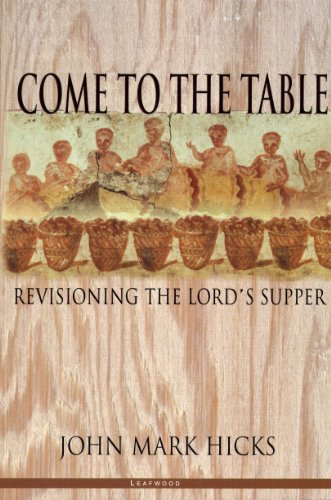
Christian practice of the Lord’s Supper is radically dissimilar from the the silent, solemn, individualistic eating of bread crumbs and drinking sips of wine that many churches practice today.
Instead, says Hicks, our practice of the supper should be a joyous communal meal as it was in earliest Christianity. The contemporary practice of the suppers needs to be “”revisioned”" according to biblical values.
Combining careful Bible study with gentle, practical suggestions, this book provides a valuable resource for enriching and renewing a central practice of Christian faith.
A timely plea for restored intent Contrary to the views espoused by the previous reviewer, Come to the Table is a felicitous call to imbue our time of communing around the “Lord’s Table” with all that it was intended.Whilst I take issue with much of gallantknights review, in my assessment he correctly notes several things:* It is indeed a scholarly presentation, but it is far from unreadable and quite engaging at times* Much of Dr Hicks’ points are indeed based on Old Testament precedent, and rightly so. Hicks’ ably brings to bear the covenental symbolism Jesus purposefully gives the Lord’s Supper. From its relationship to the passover in particular, to the relationship between altar sacrifice and the ensuing table fellowship this book offers much insight into the desire of God for communion with and among His people.* Hicks’ historical survey of meals in both the Old and the New Testaments is a highlight of the book and provides the structure for most of it. His exegesis of pertinent passages is accurate, as noted, but the discerning reader will struggle to find examples of ignoring context, inspite of gallantknight’s warnings. I find it strange that he would list Hicks’ treatment of Acts 2:46 as an example of denying context, when the author’s exposition of this verse was based solely on the immediate context. Those who would deny a reference to the Lord’s Supper in that particular verse must wrest it from the text to disallow the clear flow of thought and terminology found in verse 42.In this book Hicks’ unapologetically presents an image of the Lord’s supper that stands in stark dissonance to the practice of most contemporary traditions. This in several ways is a brave move for someone with a heritage in the Restoration Movement, as it invites(?!) criticism like that from gallantknights. Motives impugned and monikers like “change-agent” cast… (What on earth is “change-agent language”???? It must have been too subtle for me to pick up!)The strength of this book lies not so much in uniqueness, (more and more scholars acknowledge the early practice of a fellowship-meal Lord’s Supper) but in its call for a thorough rethink of firstly the theological foundation of the LS, it’s purpose, and how that is reflected in our modern practice, if it is at all.Come to the Table is not without its weaknesses. Dr Hicks, I think, was quite aware of most of them when he penned the preface and detailed its purpose. Some more groundwork for the practice of the early church could have been detailed, but where that was light Hick’s leaves a healthy bibliography for further study!
Come to the table, and enjoy it… Come to the Table: Revisioning the Lord’s Supper is an interesting treatise concerning the manner in which the Eucharist is observed in modern Christianity. This book takes the reader through a journey from the Scriptural attestation, a brief early Christian witness, and a modern application in 205 short pages. John Mark Hicks’ treatment of this debated, diversely observed, and often divisive issue is fair-minded and communicated in a conversing manner. Come to the Table invites the reader to do just that, come and dine with the master, who is host of the table.The Table discussion has long been a controversial subject amongst believers. The debate of trans-substantiation vs. con-substantiation has raged for ages. Zwingli and Luther debated the manner in which the table was conducted and sparked a reformation dialog the carried on for centuries. Is it really that simple? Or is it actually much simpler? Some questions that lack answers normally, receive an admirable treatment in Come to the Table. Some of them include, * What is discerning the body? * What is eating and drinking unworthily? * What is the table of demons and the table of the Lord?I really enjoyed this book for it scriptural substance. Hicks is very purposeful in painting the picture of what the Lord’s Table was according to Luke, Acts, and 1 Corinthians. You begin to find yourself seated at table with not only the Lord and his disciples, but also with those whom Paul is addressing in Corinth. Giving data from the Old Covenant, showing more clearly the data of the New, and modernizing our approach for today all come together quite well. I also really enjoyed the audacity that Hicks demonstrates by taking the road less traveled and taking the debate out the picture by stating pretty plainly what scripture is saying.If I could have my druthers with this book, I would opt for a more systematic approach to the topic. I am not sure that it could do the subject justice, but that tends to be my reading preference anyway. Of all the systematic deductions I have read, this book has gone an extra mile by delivering a simple, logical, and plain view without mucking it all up with presuppositions to support.This book was much worth the read and if you are interesting in learning more about the Lord’s table, maybe even ‘revisioning’ it, then this book will get you started. Hicks also provides a bit of a practical application guide for believers or congregations who are currently exploring the topic and looking for an example to kick things off with.Hope you enjoy it, I did!