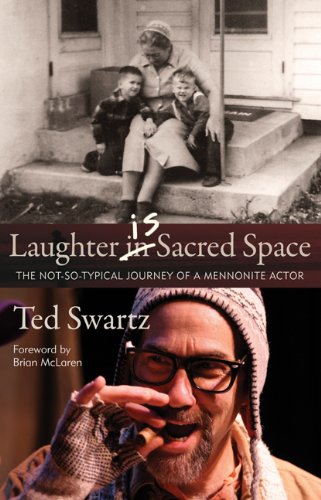

A Preview from the Prologue, Scene 1:
THIRTY-SEVEN PERCENT.
Thirty-seven percent is a comfortable humidity level, a great batting average if you’re a baseball player. If it’s a grade on a test, it is not…so great.
I was in seminary, training to be a pastor, and I had failed Greek Exegesis class. Not just failed, actually; obliterated might be a better description. Yes, obliterated, decimated, demolished, pulled a 37 percent on the final. Out of 100, yes.
When people talk of having a calling, we occasionally lift our eyebrows, as if they are telling us they hear voices, including the voice of God, perhaps.
And we mistrust them, these folks who hear voices. Because sometimes a calling is an excuse for selfishness, an abuse of power, and a sense of superiority.
But it’s also a powerful thing: it can shape a career, give meaning to life, clarify direction. I had thought I had one—what happened to it…this calling to be in seminary, to be a pastor?
I was thirty-two years old, married for thirteen years to my high school sweetheart; I had three beautiful sons (eight, six, and four years old), and a congregation in Pennsylvania counting on me to be a pastor. Not just counting on, but paying for five years of tuition and housing—a recognition and investment in the gifts they had discerned in me. It seemed like a well-orchestrated, God-directed plan, drenched in much prayer and great intentions. In my mind and many others, serving, ministering, pastoring a church was the highest call.
Was it possible to fail a calling?
I hadn’t told the congregation about this semester’s report card, wasn’t anxious for that particular conversation. They hadn’t invested thousands of hard-earned dollars for a 37 in Greek Exegesis…or a 70…or an 85, quite frankly. My wife, Sue, and I were products of the Swiss German Mennonite community of eastern Pennsylvania. One of the hallmarks of this community was hard work (neat lawns, good business sense) and God’s subsequent reward for that effort. This wasn’t the plan—failing Greek—and I wasn’t wild about the daunting prospect of Hebrew or systematic theology, on the plate for the fall semester. Oh, and what I really wanted? To be an actor.
Deep Meaning in Sacred Laughter My wife and I read this book just days after the funeral for our stillborn daughter. It turned out to be an incredible blessing during this time of sadness and grief.I found myself totally wrapped up with Ted Swartz’s ability to write in such an authentic way. He brings his reader in to some of the most vulnerable moments of his life, and my wife and I worked through our own grief and loss, it was incredibly cathartic.It took me only a few days to finish reading, and I just needed to extend my thanks to the author.Thank you for inviting us to experience your pain and joy. Thank you for illuminating subjects and moments that are often left in the darkness. Thank you for creating something that people can resonate with in deep and meaningful ways.It means a lot.
Sacred Space, on and off the stage. Ted Swartz, a first time book author, is not unaccustomed to writing. He has simply transferred his skills from the stage to the page.I read the book in one sitting. I was fascinated by Ted’s life. It’s not a glamorous life–he did not paint his family life and life on the road as idyllic, but as real, thoughtful, and very human. Ted wove his work–his characters and sketches, written with and without Lee–into his writing. It was a reminder that our life and work all intersect, sometimes more personally than we like.In Laughter is Sacred Space, Ted opens up about his relationship with former acting and business partner, Lee Eshelman. Ted and Lee’s relationship seemed as much like a brother or marriage partner as it did a business and acting partner. It was a beautiful, fraught relationship, full of things left unsaid. I could relate to this relationship–pieces of it look like my marriage, my sibling relationship, and the dynamics with my closest friends.As I read the book, I could hear Ted’s voice, his inflections, even his laugh come through. It was like reading a book of David Sedaris’ short stories–they are good, even if you don’t know what his voice sounds like, but knowing the author’s voice enhances the experience.The chapters were short, reflecting Ted’s self-described personality, temperament, and ADD tendencies. Because of these short chapters, the reader is left to wonder what the point is. But, just like Ted’s sketch comedy, the pieces come together. What you think is superfluous become essential and pivotal information later.I did have a few issues with the book. First, the publisher (I assume) bleeped out the curse words, creating a puritanical feel. Given the nature of the book, I’d assume that the targeted audience is adults. We all (even me, a pastor) say the words. We know what’s being said. It is not necessary to replace the “bad words” with asterisks.I worry that the book will not get read outside of the Mennonite community. The book’s subtitle, “The not so typical journey of a Mennonite actor” could limit the audience, which would be too bad. This is more than a memoir of a Mennonite actor; it’s the memoir of a actor, writer and Christian, and it address issues of faith, doubt, friendship and mental health.I appreciate Ted’s openness and honesty, sharing a difficult story, and his journey to a new place in his life and career.
Laughter is the best medicine It was a book I couldn’t put down and one I of the few books I have ever read cover to cover in one day. I was partly drawn in by a familiarity with the story, I had been a fan of the comedy duo Ted and Lee for a long time and have had several occasions to talk with Ted since Lee’s death, but perhaps even more engaging was the stark reality with which Ted tells his story. There were no simple truths, no sugary sweet moralization, no Sunday school answers to life’s most difficult questions, and no suggestion that everything in your life will be alright if you trust in God. Ted reveals the depth of pain, the anger, and frustration he felt at Lee’s death which juxtaposes against the humor they shared with so many around this country. He shares his crisis of faith and depression unabashedly and the discovery that even in our worst moments of life laughter can be sacred space, laughter can bring us before God and it can bring healing to our lives. Thanks for sharing this story with us.