
0
0
0
0
0
0
0
0
0
or copy the link
A molecular biologist turned Buddhist monk, described by scientists as “the happiest man alive,” demonstrates how to develop the inner conditions for true happiness.
Pinned on December 8, 2012 at 4:15 pm by Angie Cobb
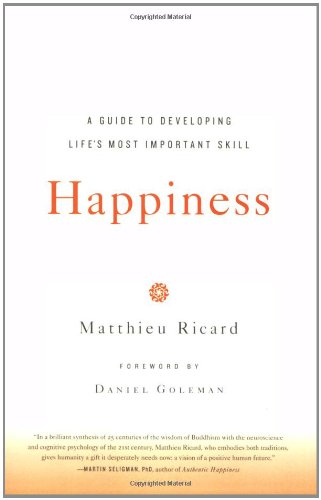
A molecular biologist turned Buddhist monk, described by scientists as “the happiest man alive,” demonstrates how to develop the inner conditions for true happiness.
Comments
An Intelligent Guide to Well-being and Happiness Review of “Happiness: A guide to Developing Life’s Most Important Skill” by Matthieu Ricard. Published by Little Brown.What a joy to find such an intelligent and creative approach to the universal quest for happiness and well-being! Matthieu Ricard begins by examining our definitions of happiness and then leads us on a journey that explores the causes and conditions for happiness, our own inner mechanisms that do or don’t create happiness, how to deal with death and difficulties, the sociology of happiness, and so on.The book’s emphasis is on how to develop inner resources for a sense of happiness and fulfillment that is not dependent on outer circumstances. There is real freedom in the knowledge that we can move towards an authentic sense of well-being by working with our ways of relating and processing the obstacles and circumstances that present themselves. This is all helped along by the short enjoyable exercises that lead the reader through a process of getting to know the mind and how it works.Matthieu Ricard’s voice is quite unique and I liked his use of metaphor to describe various emotional states and how to deal with them. I also found the sociology of happiness an interesting chapter, revealing the trends of our society, and I especially liked learning “first-hand about the work of neuroscience and the brain.
please read this book Few books clearly articulate the richness of Buddhist psychology for the general reader. Few books can inspire the reader to live more skillfully and empower her with teachings and tools to cultivate true happiness. Sure there are any number of “self-help” books on “how to feel happy,” etc., but Ricard’s book teaches about a much deeper, transformative happiness, which is within the reach of every human being.Buddhist psychology, developed over many centuries, is consistent with much that we have recently learned and continue to learn about our minds and our brains from neuroscience, cognitive science, and “western” psychology. Ricard, a Tibetan monk, is equally at home in Buddhist teachings and contemporary science–he was a scientist before his days as a monk.In a world with so much violence, so much sadness, and so much negativity, Ricard teaches us how to cultivate happiness, not by blinding ourselves to reality or by looking to some other world above and beyond our own, but by looking upon ourselves and others with the loving eyes of the Buddha. And these teachings have nothing to do with believing any doctrines or even “the truth” of Buddhism. They are practical teachings to be applied in everyday life. The “truth” is in the practice. The Buddha did not want anyone to believe anything just because he said it. He invited people to see for themselves. So see for yourself.Even if you are not and have no interest in “becoming a Buddhist,” I highly recommend this book. I would not consider myself a Buddhist, but the values expressed by Ricard are values I cherish and aspire to embody in my day to day life.The chapters are also relatively short, so each one can be read and fully digested before moving to the next. (Perfect for reading in bed or on public transportation.)If taken to heart, this book will surely benefit you. I hope that it does.