
0
0
0
0
0
0
0
0
0
or copy the link
In this timeless, haunting portrait of the people and the politics of Nicaragua, Rushdie brings to life the palpable human facts of a country in the midst of a revolution.
Pinned on July 3, 2014 at 2:58 pm by Beverly Heaton
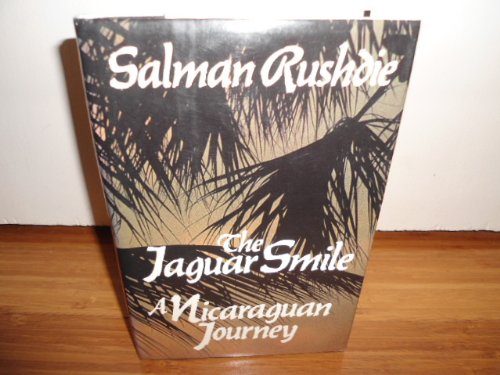
In this timeless, haunting portrait of the people and the politics of Nicaragua, Rushdie brings to life the palpable human facts of a country in the midst of a revolution.
Comments
Literary snapshots with political bite 0
Rushdie evaluates the Nicaragua of the Sandinistas… In 1986, while working on his famously infamous novel, “The Satanic Verses”, Rushdie took three weeks off to visit Nicaragua. The country had a dramatic effect on him. Ineluctably inspired, he originally planned to pen a few articles on the subject and leave it at that. But the words inexorably grew into this small book, which ultimately delayed “The Satanic Verses” by six months. So what occurred in that short time span to cause Rushdie to shelf his hulking novel in favor of a diminutive political travelogue?In the preface Rushdie confessed a long standing interest in the subject of Nicaragua. Especially following the Reagan Administration’s disparagement of the alleged new Central American “red threat” (and subsequent funding of the counter-Sandinista force, the “contras” – which later fed into the Iran-Contra scandal). Apparently he felt an affinity with a small country against a giant (a la Gandhi vs. Britain) and “how it felt to be there, on the bottom, looking up at the descending heel.” So he didn’t visit carte blanche or on a whim. He wanted to know the workings of the force that had toppled Nicaragua’s forty year dictatorial regime (the Somozas). And how this new Sandinista government (at the time in power for seven years) responded to the contra threat and to the needs of its populace. In Nicaragua, Rushdie unearthed some of the social and literary themes that pervade his work. This may explain his enthusiasm towards the subject.The book outlines Rushdie’s trip more or less chronologically. Starting in Managua Rushdie gives a brief history of the city and of the resistance to the previous dictatorship. This culminates in a biography of one of the most famous Nicaraguarans: Augusto César Sandino (from whom the Sandinistas took their name). Rushdie observed the abstract pictograph of Sandino’s hat everywhere. This ubiquitous symbol nearly took on the role of the man himself. The hat equals the man; the symbol becomes flesh. As a guest of the Sandinisita Association of Cultural Workers, Rushdie had access to the highest levels of government. He traveled and dined with the new Sandinista élite. Most of who, surprisingly, had literary backgrounds. Accompanying the Vice President (and novelist) Sergio Ramírez, Rushdie witnessed a land re-allocation (from the state to the peasantry) in Camoapa. With the President (and poet), Daniel Ortega, he watched the first phone call from Nicaragua to Moscow and Havana (connections that in no way endeared the country to the Reagan Administration). But some signs of disappointment appeared during his conversation with Father Ernesto Cardenal the Minister of Culture (and poet). Cardenal talked about censuring the press during wartime as a “cosmetic” issue. This depressed Rushdie. He then traveled to Estelí and met the nine comandantes de revolución (the founders of the new government). But Rushdie also talked with campesinos (peasants) in the Enrique Acuña co-operative. Many found themselves displaced by the country’s issues. Despite their poverty, they fed Rushdie fertilized hen’s eggs (the “eggs of love”). He also talked with extremely young soliders in the Germán Pomares field hospital. Many of them remained ready for battle regardless of their injuries. And on the somewhat neglected west side of Nicaragua he found lots of rain, more poverty, and some disillusionment with the revolution. Lastly, Rushdie debated the widow of the assassinated editor of “La Prensa” (censored by the Sandisitas), Doña Violeta. He found her claims of rampant communism in her country insincere. Rushdie later concluded that “if Nicaragua was a Soviet-style state, then I’m a monkey’s uncle.”Rushdie often asked people, whether high or low on the social hierarchy, very pointed questions – he and Doña Violeta really get into it. Sometimes he even called them when they dodge a question. In the end Rushdie found some things to like and some things to dislike about the Sandinista government. For example, he outright states: “It disturbed me that a government of writers turned into a government of censors.” But he remained impressed by the government’s land distribution program.Like all of Rushie’s work this one garnered a broad spectrum of responses (he can’t seem to avoid politics, for better or worse). The supporters of the Reagan Administration obvioulsy didn’t take kindly to it (which may reveal why George H.W. Bush provided no support to Rushdie during the “Satanic Verses” affair), and many praised the alternate view of Nicaragua that Rushdie portrayed. But some accused Rushdie of exemplifying petty bourgesois values (i.e., a rich westerner goes “slumming” in Central America and then returns to his privileged lifestyle). And some simply couldn’t understand how Rushdie could possibly identify with the Nicaraguans. In the 1997 preface, Rushdie still defended the views espoused in the…