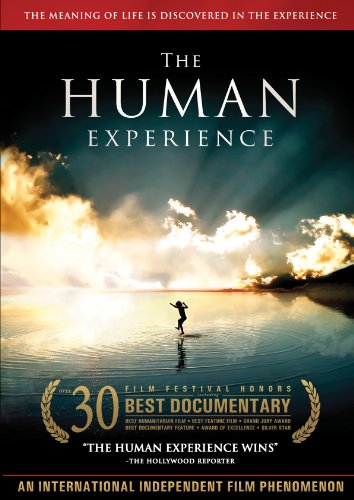

We are all searching for answers to the most basic questions: Who are we? Why are we here? Do we really matter?
In a world fraught with hostility and violence, an altruistic group of young men endeavor to understand the true essence of the human spirit by visiting forgotten souls such as homeless New Yorkers, Peruvian orphans and isolated Ghanaian lepers. By spotlighting heartwarming stories from around the world, this uplifting documentary shows viewers that every single person, no matter his or her lot in life, is beautiful. Gorgeously filmed and masterfully narrated, THE HUMAN EXPERIENCE explores with depth and compassion what it means to be a human being.
Features insight and commentary from spiritual leaders and philosophers including: Anna Halpine, Dr. William Hurlbut, Rabbi Simon Jacobson, Dr. Alveda King, and Rev. Richard Neuhaus,
Special Features: Commentary with filmmakers; Theatrical Trailer; Photo Gallery; Subtitled in Spanish, Portuguese, Polish, German, and French.
Product Features
- HUMAN EXPERIENCE, THE (DVD MOVIE)
A Well Meaning And Heartfelt Documentary That Might Have Benefited From More Narrative Simplicity I have no doubt that the independent documentary “The Human Experience” will be embraced by many as a heartfelt film experience. And why not? It is a sincere and well meaning journey that covers a number of interesting and relevant themes. The film’s central message seems to be that we are all connected, no matter our condition or status in life, by the bond of simply being human. It’s a great thought, if a fairly broad one. And while individual sequences within the film can be quite involving and moving, the film does get weighed down with a lack of focus. This is what I call “everything but the kitchen sink” filmmaking. They are so eager to cover as much as possible in as many different ways as possible, the film starts to lose the power of simplicity. This is a journey of self discovery, a sociological examination of relationships, and an anthropological study of various cultures–just to name a few of the many narrative threads. It’s an intriguing film that, if anything, is overstuffed with ideas it wants to convey.At heart, I really admire the premise behind the film. Two brothers having experienced a difficult upbringing get into the mind set that they really want to experience life. They want to see what drives other people, to find hope where there seems like there would be none. The documentary chronicles three such experiences–living among the homeless in New York City, visiting abandoned children in a Peruvian hospital, and traveling to Africa to sit down amongst a leper colony. But more than these experiences, the film seems to be about how the people they meet influence the principle characters. Of course, any one of these segments would have emotionally complex moments–but within the style of filmmaking presented, I felt we barely scratched the surface of each stop. Why? Because instead of digging deep with actual content from the visits, the film also interjects various interview segments from a diverse group of commentators. These interruptions often make obvious points or espouse cliched platitudes and I’d have rather spent more time with the actual subjects of the film. More meat, less filler.On the topic of filler, the film also serves as somewhat of a travelogue. You’ll see the boys dancing, surfing, frolicking in a waterfall–and the scenery is lovely, but again it detracts from weightier material. And when words don’t seem enough, the film is loaded with meaningful musical montages. It can be a bit much. I mean, sure it’ll tug at your heartstrings to watch the Peruvian kids play while a melancholic score adds drama–but again, it isn’t real content. And some of the musical interludes are over stock footage depicting random people. I suppose because we’re all people and we’re all connected? But it doesn’t serve the narrative in the least. As if the three experiences aren’t enough, though, the experts than dissect what it means to be a family in yet another plot tangent.I liked “The Human Experience” and certainly recommend it. The brothers are likable and the film is uplifting and easy to watch. I just wished it had maintained a clearer focus. I would have lost the random montages and the expert interviews and really concentrated on the heart of the film. If the movie had spent all its time on the actual experiences, a stunning and unforgettable film might have emerged. As is, though, “The Human Experience” is a lovely, well-meaning film with its heart in the right place–but it didn’t impact me in the way that I’d hoped. KGHarris, 3/11.
The Gift of Life Screams Out in “The Human Experience” The award wining, independent documentary, “The Human Experience” by Clifford Azize, Jeffery Azize, Michael Campo, and Matthew Sanchez is a must see for the entire family. I had ordered a copy from Netflix on the basis of recommendation but with no knowledge about the film or its origins. I found it inspiring, fascinating, captivating, and rewarding. I plan to share this with my children and grandchildren as well as with a ministry I co-lead for those who are in-transition.”The Human Experience” follows a group of young men (Azize brothers, Campo, and Sanchez) who meet at a half-way house in New York City and then travel around the world in search of answers to life’s big questions – Why am I here? What is life? What is the meaning of it all? Their first foray takes them into the streets of NYC during the coldest week of the year to live with the homeless. They interview the homeless – “I am grateful, despite being homeless, for life.”Their next adventure takes them to Peru, as part of a surfing club focused on charitable acts, where they work with orphans (many abandoned by their parents) and disabled children. And finally, they travel to Africa to work with abandoned lepers in the forests of Ghana.What is learned changes the young men forever. The human spirit, the appreciation for the gift of life, and the search for meaning are universal, regardless of circumstance. We are all connected, no matter our condition or status in life, by the bond of simply being human. This film also challenges the thought that some lives are not worth living (disabled and diseased) and that those who are aborted did not deserve the life that was given to them.